You Know What Scares Me the Most About Giving Up Easy
What Really Scares People: Tiptop ten Phobias
Fright Factors
Whether you jump at the sight of a spider or piece of work upwardly a sweat at the mere mention of getting on an airplane, fears and phobias abound. Nearly 19.ii million American adults ages 18 and over, or some viii.7 percent of people in this age group in a given year, take some blazon of specific phobia, or extreme fear. Hither are some of the worst.
The Dentist
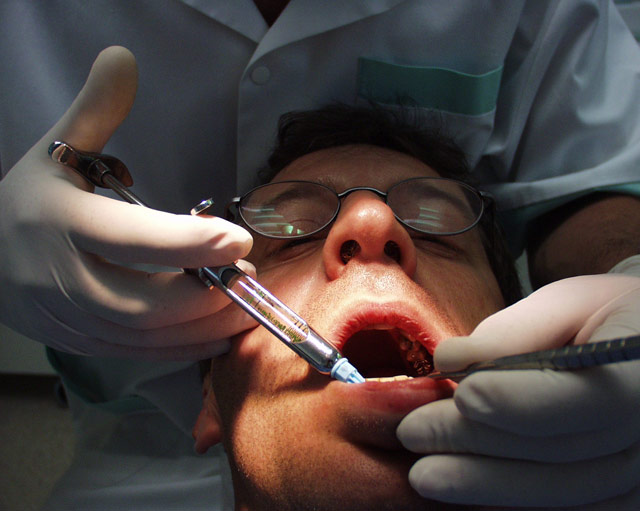
Non many people spring for joy at the idea of an intense session of plaque removal. And between ix percent and 20 percent of Americans say they avoid going to the dentist because of feet or fear, co-ordinate to WebMD.
Full-diddled dental phobia is a more serious condition in which a person avoids the dentist at all costs. People suffering from the phobia commonly only show up at the dentist when forced by excruciating pain.
Various factors tin keep someone from the dental chair, including a bad experience in the by, fear of injections, and feelings of helplessness (think dental chair and drill in oral cavity). How to get to the dentist before you have a mouth full of rotting teeth? Realize a dentist can piece of work with you to brand yous more than comfortable during cleaning and other procedures. For instance, you can prepare upward a hand wave that signals the dentist to stop a procedure immediately.
Dogs

From tiny, bag-size pups to buff German shepherds, any flavor of homo's best friend tin can scare the pants off some who suffer from cynophobia, or extreme fear of dogs. Typically, people tend to develop fear of dogs as a consequence of beingness bitten themselves or seeing somebody get bitten, according to psychology professor Brad Schmidt of Ohio Country University. Some canis familiaris phobics, however, became fearful of pooches because they know dogs do sometimes bite. Handling generally involves coming maw-to-maw with the barkers.
Frightful Flight

There'due south no such thing every bit "the friendly skies" for the 25 million or so people in the United states of america who suffer from some form of flying fear. Such fears range from just a flake of anxiety to an farthermost flying phobia called aviophobia that can proceed a person off airplanes at any cost.
These frightful fliers fall into ii evenly split groups: those who are agape of aeroplane crashes and those who are claustrophobic and adventure a panic set on inside a plane'south tight cabin quarters, according to Barbara Rothbaum, professor in psychiatry and manager of the Trauma and Anxiety Recovery Program at Emory University School of Medicine.
Like other phobias, reason plays little role in calming such crash fears. For instance, the lifetime odds of dying in an air travel blow are 1-in-xx,000 compared with 1-in-100 for an automobile accident and 1-in-five from heart disease (based on 2001 statistics). However, handling for flying fears — sans a drunken daze — which includes virtual reality therapy and other forms of cognitive-behavioral therapy has shown much success, Rothbaum notes.
Thunder and Lightning
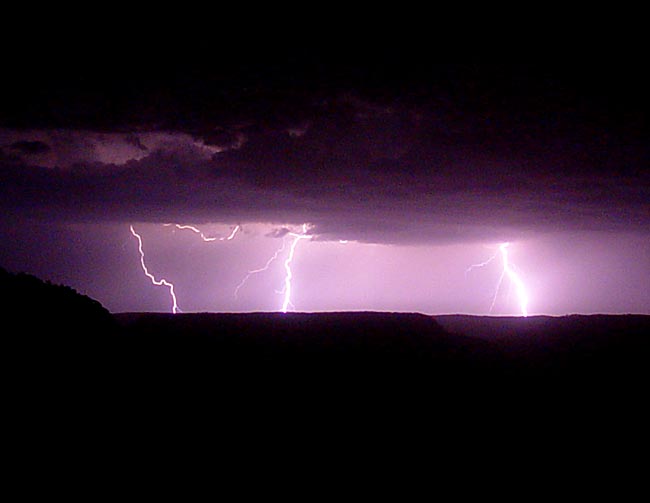
The crackling of thunder and lightning tin lead to a heart-pounding, sweaty-palm meltdown for individuals with severe weather phobia. In fact, some even pack upward and move to regions known for calm weather, according to John Westefeld of the Academy of Iowa.
Westefeld reported on a survey of mostly higher-age students in 2006 in which 73 pct of participants had "a fiddling bit" or "moderate" fright of weather. "I call back in that location are more people out in that location who take [severe conditions phobia] than most people might assume," Westefeld told LiveScience. "A lot of the folks I interviewed indicated they were very embarrassed about this then that they hadn't told anybody about it. In some cases they indicated their spouses didn't fifty-fifty know about it."
In terms of treatment, Westefeld recommends "a combination of social support and accurate data, and training in means of coping with anxiety and panic." That way, those with intense storm frights tin reach a middle ground, where they have enough fear to continue them safety without debilitating them.
The Dark

For many kids, lights out tin mean immediate distress that the boogey man, or some variation, will pop out from beneath the bed or behind a cupboard door. In fact, being afraid of the dark is one of kids' most mutual fears. "What ever amazes us are the thoughts or beliefs that kids have," said Thomas Ollendick, professor of psychology and managing director of the Kid Study Center at Virginia Tech. "Kids believe everything imaginable, that in the dark robbers might come or they could get kidnapped, or someone might come up and accept their toys away." Essentially, their fears stem from "the unexpected," he said. While kids grow out of such fears, if the anxiety reaches extreme levels and is considered a phobia, chosen nyctophobia, Ollendick says that can final through adulthood if left untreated.
Harrowing Heights

If you get the heebie-jeebies when standing on a rooftop or looking upwardly at a alpine building, you're not lonely. Fright of heights is 1 of the most common phobias (followed by public speaking) with an estimated three percent to 5 percent of the population suffering and then-called acrophobia.
While scientists had thought such phobia was the upshot of an irrational fear to normal stimuli, new research is suggesting otherwise.
In the report, published in the journal Proceedings of the Regal Society B, participants had to judge the height of a edifice when continuing at basis level and when atop the building. Compared with participants who scored lowest on an acrophobia test, those about afraid of heights judged the building to be almost 10 feet (3 meters) higher at basis level and 40 feet (12 meters) taller from the peak of the edifice. So the building actually seems taller to acrophobics, information technology seems.
Other People
Does the thought of speaking in front of an audition color your face up a vivid reddish, transport sweat pouring from your pores and bring a sick feeling to your gut? Those are just a few of the signs of social phobia, which affects well-nigh 15 million American adults, according to the National Institute of Mental Health. And it's not express to public speaking: Those affected tin become the sweats over eating or drinking in front of others, or a general feet when around almost anyone other than family members. The fear begins in childhood or adolescence, normally around the age of xiii.
Scary Spaces

Nigh 1.8 million American adults over eighteen years of age suffer agoraphobia, which involves intense fright and anxiety of any place or situation where escape might exist difficult, according to a 2008 report by the National Institute of Mental Wellness. Commonly feared spots and activities include: elevators, sporting events, bridges, public transportation, driving, shopping malls and airplanes, according to the Mayo Clinic. The fright can pb a person to avoid leaving their home, traveling in a car or being in a crowded area.
Creepy Crawlies
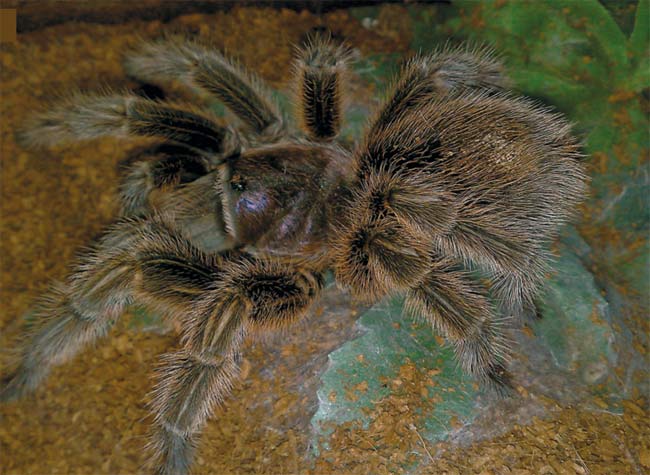
While most would at least blanch at the sight of Aragog, the human-eating spider depicted in "Harry Potter and the Chamber of Secrets," the everyday spider can crusade the aforementioned fear in some people. And it turns out, women are 4 times more probable to fright such arachnids than men.
In a study being published in the journal Evolution and Human Behavior, David Rakison of Carnegie Mellon University in Pittsburgh found that xi-month-old girls quickly learned to associate images of spiders and snakes with a fearful facial expression, while babe boys did not.
From an evolutionary perspective, this makes sense, every bit women would have encountered such creepy crawlies regularly while gathering food, Rakison speculates. And, he says, the blench factor could keep both moms and their infants safe. Manlike men, on the other hand, would have needed to take frequent risks when hunting and so evolutionary pressure to leap at the sight of a spider would be less than beneficial.
Slithering Snakes
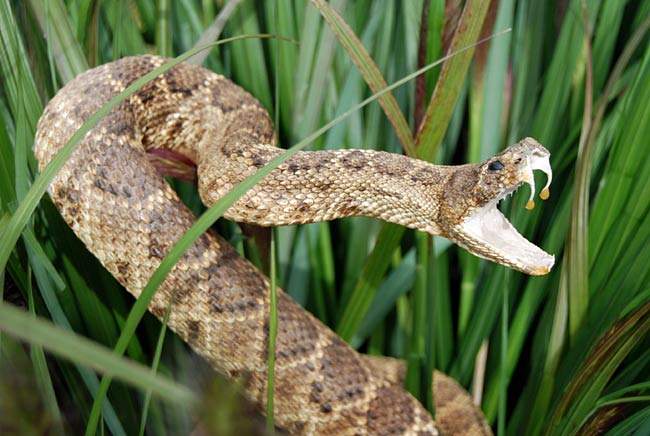
Considered 1 of the near common phobias, an extreme fear of snakes could be evolutionarily imprinted in people, studies suggest. Long ago, spotting a snake (or even a spider) would accept been an advantage to a person's survival, according to ane study in which adults and children could option out images of snakes among various not-threatening objects more quickly than they could pinpoint frogs and flowers. The power to spot a snake in the blink of an eye, the researchers say, likely helped our ancestors survive in the wild.

Jeanna is the editor-in-main of Alive Science. Previously, she was an assistant editor at Scholastic's Science World magazine. Jeanna has an English degree from Salisbury University, a main's degree in biogeochemistry and environmental sciences from the Academy of Maryland, and a graduate scientific discipline journalism degree from New York University. She has worked as a biologist in Florida, where she monitored wetlands and did field surveys for endangered species. She also received an ocean sciences journalism fellowship from Forest Hole Oceanographic Institution.
Source: https://www.livescience.com/13434-phobias-fears-acrophobia-heights-agoraphobia-arachnophobia.html
0 Response to "You Know What Scares Me the Most About Giving Up Easy"
Post a Comment